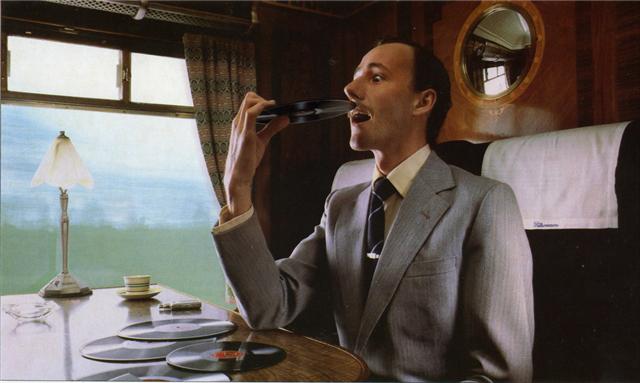
Andy Partridge algo incomodo en este prog 'live' en TV, pero me sorprendio' su gran gusto y capacidad en los asolos de guitarra al final. Temazo!
sábado, marzo 20, 2010


jueves, marzo 18, 2010
miércoles, marzo 17, 2010
Que momento!
Before 'indie' became a meaningless brand, renegade filmmakers such as Alejandro Jodorowsky, John Waters, George A Romero and David Lynch lived and breathed true independent spirit.
These directors crawled out of the shadows with confrontational and deeply personal films which mainstream distributors didn't know what to do with. This nascent breed of cinema needed a fresh approach. Enter Ben Barenholtz. He owned a 600-seat cinema in downtown New York called The Elgin. At one o'clock in the morning on December 18 1970 The Elgin premiered an unknown film called El Topo by Chilean-born director Alejandro Jodorowsky. Barenholtz's idea was simple: scrap all formal advertising and rely on word of mouth promotion. His plan worked. Soon stoned hipsters were queuing round the block. And many of them were returning week after week. The 'midnight movie' was born.
Barenholtz's savvy formula spread like wildfire. Across the US cult films started screening in the midnight hour to packed houses of wild-eyed students, artists and insomniacs. Droves of degenerates came out to witness the shit-eating denouement of John Waters' infamous Pink Flamingos. They danced in the aisles to Perry Henzell's reggae-gangster film The Harder They Come . And they sat scratching their heads through David Lynch's mind-melter Eraserhead.
Without this fertile midnight slot these films and their directors would have disappeared without a trace. But it didn't just give undiscovered talent a much-needed arena. It also resurrected long-forgotten gems like Tod Browning's sideshow fable Freaks and Ed Wood's gender-bender Glen Or Glenda and even gave mainstream flops like The Rocky Horror Picture Show a second life.
These directors crawled out of the shadows with confrontational and deeply personal films which mainstream distributors didn't know what to do with. This nascent breed of cinema needed a fresh approach. Enter Ben Barenholtz. He owned a 600-seat cinema in downtown New York called The Elgin. At one o'clock in the morning on December 18 1970 The Elgin premiered an unknown film called El Topo by Chilean-born director Alejandro Jodorowsky. Barenholtz's idea was simple: scrap all formal advertising and rely on word of mouth promotion. His plan worked. Soon stoned hipsters were queuing round the block. And many of them were returning week after week. The 'midnight movie' was born.
Barenholtz's savvy formula spread like wildfire. Across the US cult films started screening in the midnight hour to packed houses of wild-eyed students, artists and insomniacs. Droves of degenerates came out to witness the shit-eating denouement of John Waters' infamous Pink Flamingos. They danced in the aisles to Perry Henzell's reggae-gangster film The Harder They Come . And they sat scratching their heads through David Lynch's mind-melter Eraserhead.
Without this fertile midnight slot these films and their directors would have disappeared without a trace. But it didn't just give undiscovered talent a much-needed arena. It also resurrected long-forgotten gems like Tod Browning's sideshow fable Freaks and Ed Wood's gender-bender Glen Or Glenda and even gave mainstream flops like The Rocky Horror Picture Show a second life.
Director Stuart Samuels brings his 1983 book 'Midnight Movies: From The Margin To The Mainstream' to vivid life in this film. His written account was a detailed firsthand despatch from the smoky aisles of midnight screenings and here, in front of the camera, he gathers all the scene's movers and shakers to discuss their personal contributions and relive the experience.
Jodorowsky still seems genuinely bemused by the popularity of El Topo: "There were a lot of people who came to see El Topo 30 times! It's incredible, no? Really incredible." Romero comes across as having lost none of the revolutionary chutzpah that drove him to make Night Of The Living Dead in 1968. Lynch is, well, Lynch, but it is interesting to hear him acknowledge John Waters' support of Eraserhead. And Waters himself proves a perceptive commentator. "Midnight movies were about marijuana."
Critics and distributors are called on to flesh out the story with wider-themed ideas about the social and political atmosphere of the time. Roger Ebert of the 'Chicago Sun-Times' explains that, "at some point in the 1960s people became cynical. Midnight movies were the opening wedge in the birth of irony."
The Boston distributor Larry Jackson describes the reaction of students to The Harder They Come as something "like catching lightning in a jar." The most succinct point, however, comes from an excitable audience member leaving a Pink Flamingos screening: "John Waters has his finger on the pulse of America. He has his thumb up America's ass!" And that, in a nutshell, is why midnight movies became the phenomenon they did.
Jodorowsky still seems genuinely bemused by the popularity of El Topo: "There were a lot of people who came to see El Topo 30 times! It's incredible, no? Really incredible." Romero comes across as having lost none of the revolutionary chutzpah that drove him to make Night Of The Living Dead in 1968. Lynch is, well, Lynch, but it is interesting to hear him acknowledge John Waters' support of Eraserhead. And Waters himself proves a perceptive commentator. "Midnight movies were about marijuana."
Critics and distributors are called on to flesh out the story with wider-themed ideas about the social and political atmosphere of the time. Roger Ebert of the 'Chicago Sun-Times' explains that, "at some point in the 1960s people became cynical. Midnight movies were the opening wedge in the birth of irony."
The Boston distributor Larry Jackson describes the reaction of students to The Harder They Come as something "like catching lightning in a jar." The most succinct point, however, comes from an excitable audience member leaving a Pink Flamingos screening: "John Waters has his finger on the pulse of America. He has his thumb up America's ass!" And that, in a nutshell, is why midnight movies became the phenomenon they did.
Samuels' film successfully charts the midnight trend: from its shabby make-do origins to its full-blown counter-cultural heyday. It also documents its demise. The definition of mainstream shifted and Hollywood absorbed the midnight movie ethos: Jaws was a commercial reinvention of Night Of The Living Dead; big-event films like Star Wars fed into the fertile cult audience that midnight movies had created. The cross-pollination worked the other way as well: Lynch went on to studio projects like The Elephant Man and Waters is now a bankable and almost respectable name. Without doubt, though, VHS was the final nail in the midnight movie coffin.
The only real problem with this documentary is not the fault of the director. Since the publication of Samuel's book almost 25 years ago anyone with even a passing interest in cult films has been deluged with fanzines, books and articles devoted to the midnight movie genre and its key players. As a result, the film Midnight Movies: From The Margin To The Mainstream fails to say anything that hasn't already been said many times before. It is just as well that it never gets boring hearing it
The only real problem with this documentary is not the fault of the director. Since the publication of Samuel's book almost 25 years ago anyone with even a passing interest in cult films has been deluged with fanzines, books and articles devoted to the midnight movie genre and its key players. As a result, the film Midnight Movies: From The Margin To The Mainstream fails to say anything that hasn't already been said many times before. It is just as well that it never gets boring hearing it
sábado, marzo 13, 2010
JACQUES BREL . LE MORIBOND
Este primero...
despues lo otros.
Se comprende porque el texto tanto le agrada a Nirvana.
jueves, marzo 11, 2010
projekt kultury jjs ( AK-Momo - Greasy Spoon )
Greasy Spoon de Ak Momo, un proyecto musical de Ana Karin Von Malmborg. Hermoso.
Muy interesante el disco de este Duo!
AK-Momo are a musical duo from Stockholm, Sweden. They met through mutual friends and at a bar in central Stockholm Olsson invited Malmborg to his studio for a visit. The group consists of Anna Karin ('AK') von Malmborg (vocals, Optigan and whistling) and Mattias Olsson (Optigan, Mellotron and Orchestron). The band formed in July 2003 and recorded the basis for their debut album Return to NY in six afternoons writing two songs every time.[citation needed] The music is based around the sounds in the Roth Händle studio. After the initial six afternoons Olsson then recorded additional overdubs with the Mellotrons, Optigans and Orchestrons and mixed the album.[1].
They have been compared to Portishead for their use of synth instruments, Kate Bush for the vocals and Goldfrapp.
Kleenex/Lilliput
You can't dispute Liliput's status as pioneers of feminist art-punk. Along with fellow travelers like the Slits and the Raincoats, this (mostly) female Swiss group took advantage of punk's anything-goes attitude and created jittery, spirited pop that was both in step with the times and completely singular. But even if Liliput hadn't paved the way for other guitar-wielding patriarchy-smashers, The Complete Recordings would still prove one thing: They were totally fun. This double-CD retrospective gathers 46 songs recorded under five different lineups from 1978 to 1983, including their initial tracks under the name Kleenex (a certain global conglomerate demanded the name change). The early material is a riot of exuberant energy, taking stylistic cues from peers like Gang of Four and Wire--propulsive bass, skittering pop rhythms, slashing guitars--and adding distinctive overlapping vocal patterns, which are sung, shrieked, and hiccupped in three languages and made-up dadaistic slang. More than 20 years on, it still sounds fresh. It's edifying to hear a track like "Ü," with its elastic aggression, cheeky, monkeylike squeaks, and punky-tough guitars, and realize it was recorded by four young Swiss women in 1978, not last week by Le Tigre. Liliput's later material is more deliberately artsy, adding "avant-tribal" influences and more expansive instrumental passages, but it's equally intriguing. For art-punk historians and adventurous pop fans, The Complete Recordings is as entertaining as it is essential. --Lisa Gidley
Se llamaban 'KLEENEX', punk femenino Suizo 1978

LILIPUT (ex-Kleenex)
Muy frescas, divertidas, originales. Despertaron mi interès hace 32 años y aun suenan buenisimasEscuchar fragmentos de temas " U", "heidi's Head" y "Ain't You" en (por ejemplo) Amazon.
miércoles, marzo 10, 2010


Preparense...
Pasos a seguir para construir una estufa a leña de alto rendimiento
La estufa a leña de alto rendimiento -comúnmente llamada estufa rusa- es un artefacto económico y de fácil construcción. Una de sus grandes ventajas es la capacidad de acumular calor en su estructura para entregarlo lentamente a lo largo de las horas, aún después de apagada. Si se compara este modelo con una estufa común de hierro, la estufa rusa produce el mismo calor con 100 kg de leña que una de hierro con 400 kg.
Se la considera de alto rendimiento porque está construida con ladrillo refractario que tiene una gran capacidad de absorber el calor, acumularlo y luego entregarlo lentamente; la temperatura de combustión es muy alta y el recorrido de los gases dentro de la estufa es muy largo antes de salir por la chimenea. De esta manera, casi todo el calor queda dentro de la casa y, además, la combustión es muy completa.
En esta dirección http://www.inta.gov.ar/info/intainfo/doc/estufa.pdf encontrará los pasos a seguir para construir la estufa, que están acompañados de ilustraciones y planos para una mejor interpretación. Este trabajo fue realizado por el INTA Chubut. Para bajar el documento necesitará tener el programa Adobe Acrobat.
Estufa Rusa
Russian Stoves are perhaps the most efficient wood burning space heaters known to man. The intense heat given off by the fire is obsorbed by the brick walls that make up the stoves dense structure. Because of this, there is a slow cooling down period, which means that the Stove requires fueling only twice a day, and at most maybe three. At the time it is being fired, one can put his face into the chimney of a Russian fireplace and feel only a warm moist air escaping, thus assuring that a minimul amount of pollutants are being sent into the air. pollutants, or rather unburnt particles, are being burnt off by the extreme high temperatures in the burning process as they travel through the Stoves makeup as seen in the above drawing. This is being accomplished in a natural way without the aid of expensive catalytic converters, which require constant replacement


martes, marzo 09, 2010
domingo, marzo 07, 2010
Ciavarro Di Francesco Sapore Di Mare 2 (1983) Ragazzo Triste
Piccola commedia 'light' Itálica años 80
Jean Vigo- Taris, roi de l'eau (1931)
Jean Vigo, genio poeta del cine. Este es un docu que hizo sobre el gran campeon de natacion Frances, Taris. Imperdible, y raro.
sábado, marzo 06, 2010
viernes, marzo 05, 2010

viernes, febrero 26, 2010

miércoles, febrero 24, 2010
martes, febrero 23, 2010
Desde Nono (ver movimiento de mi cabeza...)

Se presentan dos nuevas fechas de ROMAPAGANA
en:
ROSARIO y
Venado Tuerto.
Este fin de semana 26/27 Febrero.

domingo, febrero 21, 2010


viernes, febrero 12, 2010
miércoles, febrero 10, 2010


martes, febrero 09, 2010
cartoon Gianini e Luzzati La Gazza Ladra DrinkOrDie
que Lea disfrute de este gran dibujante italiano, en ausencia de Romapagana.
Puede vser que no estè perfectamente en sync..
Urban Dance Squad - Fast Lane
La banda que sirvio' de inspiracion para RHCP , Rage Against the Machine y varias otras... un discazo del 89
Working for the Clampdown - The Clash - London 80
el unico tema que me convencio' cuando salio' LONDON CALLING.
lunes, febrero 08, 2010

sábado, febrero 06, 2010

jueves, febrero 04, 2010
Butch Morris
| Butch Morris |  | ||||
| ALESSANDRO CASSIN
| |||||
| To resume again... More Hysteria, Please Psychoanalysis? The Pre-session of Ricki Lake The Lesbian Session Poste Restante
|  Alessandro Cassin: What does the improvising conductor do, provided words like conducting, arranging, composing, qualify to describe the work? Butch Morris: The improvising conductor arranges the extemporized material of improvisers. He has a vocabulary of signs to instigate the events: I'm not conducting in the traditional sense, I'm provoking or asking for certain things to happen, but even of those things I have no idea until I hear them. AC: Would you say of what you do that it's something between arranging and composing? BM: Actually I wouldn't truly call it composing, but I could call it arranging, yeah, granted that you cannot start to arrange anything before you hear the material, before you have the material at hand. AC: As to the simultaneous process of listening and doing something with what you've listened to, how different is it from what a regular conductor does, and what about the risks of speed in this process, and the power trip which I guess shaping a whole ensemble should entail? BM: At certain times it does create a sensation of power, yeah. The power trip didn't start with me, it started with the idea that someone had to stand before an orchestra. There is a certain kind of aura, of position of authority that conductors themselves have created over the years. However, what I'm doing is similar and different. It's similar in the sense that I'm keeping a number of people in line and I'm giving my view of direction, particularly direction of music. Of course with me you have no idea what direction the music will take. The traditional conductor instead knows the direction of the music, what it's going to sound like. I have no idea of what a person is going to do, or play, or what the first sound is going to be, the second sound or any sound. But I know that as soon as I hear it, if it needs a certain kind of care I have to shape it. AC: How is chance at stake here? BM: Chance is a word John Cage has used a lot in his writing. I don't like to see it as chance, I like to see it as risk. I think risk insinuates also a certain kind of challenge. Chance doesn't necessarily do that to me. [...] AC: Do musicians resist your method, what are the most common questions raised by people at work with you? BM: I have had resistance to the method, though that's generally when I'm called to work with an existing ensemble that doesn't know quite what I'm doing or why I'm doing it. One of the most common questions or statements is, yes — why am I doing it? and — if you want me to do it why don't you just write it down? What I'm trying to bring about is ensemble spontaneity; there are still a lot of people resisting any kind of total improvisation. AC: Would you rather work with the same musicians on a regular basis, or do you envision being so familiar with the method as to be able to conduct improvisation with little or no rehearsals? BM: I do have a core group in New York of about five or six people that I use all the time not only for conductions but for notated compositions and other kind of projects. It makes my ensemble more flexible when I hire people that read music well. Believe me, I like a lot of different kinds of music, and I like to write it, and I also like to improvise. One of the reasons I even started thinking of this conducting was really to control, make more flexible and lucid my notated music. AC: Let's get to the second part of the question, do you envision being so familiar with the method as to be able to conduct improvisation with little or no rehearsals? BM: I would like that very much, I hope it's coming to that. That I could call up three people in every country I've ever been, but there is not really that kind of familiarity at this point and I feel obligated to at least run through the vocabulary one more time. AC: You have been conducting for twenty years. How does progression in your work contemplate evolution? BM: It still feels very young to me and it still feels very fresh, Conduction #1 is completely different from Conduction #31. I think there's a long way to go... I want to take it a lot further, a lot. There's only been one composer to write for my particular talent, that was Misha Mingelberg in '87. He wrote a piece for me to conduct and it really worked quite well. His identity was still in the music, it didn't sound like me, I think this could be a problem with some composers thinking they are bound to loose their musical identity. [...]  | ||||

martes, febrero 02, 2010

lunes, febrero 01, 2010

Roberto Matta el hombre 11


Nacido el 11 de Noviembre de 1891 en Santiago, Chile.
Muere el 23 de Noviembre de 2002 en Tarquina, Italia
viernes, enero 29, 2010
Fantozzi - Mariangela Commessa
Fantozzi no es el unico en pensar que su hija se parece a un mono...
acá la va a buscar en su trabajo, ya que ella es empleada en un negocio de mascotas en Roma.
jueves, enero 28, 2010

lunes, enero 25, 2010


domingo, enero 24, 2010
sábado, enero 23, 2010

miércoles, enero 20, 2010

martes, enero 19, 2010

lunes, enero 18, 2010
Ashes to Ashes - David Bowie - Live at the beeb
Cuando salio' este tema
estaba terminando la escuela. De pronto me di cuenta que este hombre tenia la RARISIMA calidad de seguir asombrando musicalmente para LARGO rato...
Version fresca esta, no?
lunes, enero 11, 2010
Todd Rundgren - AWATS - Zen Archer live
Esta 'vuelta' de Todd es para fans MUY tolerantes... roza el papelón!
(cuando aparece en plumas, parece la madre de Brian Eno (epoca Roxy Music).


sábado, enero 09, 2010
korg microsynth used as amp for guitar? Hmmmm, interesting...

Just run an instrument cable into the audio 2 input. From there turn the edit select 1 knob to osc 1 and set the value to aud. Then set the 2nd and 3rd knobs to zero values. Push down a few keys and play the guitar. From there you can just edit the signal like a normal sound on the microkorg. Enjoy!
jueves, enero 07, 2010
miércoles, enero 06, 2010
Encontré una vieja crítica.. en La Bitácora.
Un rito de culto
Romapagana, la banda de Andrea Prodan, mostró en Unione e Benevolenza un show de los que ya no quedan muchos. Excéntricos, potentes y ciclotímicos. Imperdibles.
En un capitulo más de las aventuras de Andrea Prodan, el sábado a la noche nos lleva a Unione e Benevolenza. El viejo club de la calle Perón anunciaba la presencia de Romapagana como acto central de la primer velada de septiembre. En este caso ya no se trata de algún proyecto vocal como fue el disco solista del hermano de Luca (“Viva Voce”, 1996) o los geniales Maltratan Hamsters, sino una banda con todas las letras.Los afiches acusaban un “21 horas puntual” (la idea era mostrar una película antes del recital), pero un problema con el proyector hizo que la espera se estirara hasta casi la medianoche. El televisor del bar servía para que algunos se distraigan con Gimnasia - Independiente, aunque para ser honestos tampoco fue un gran partido.Lo cierto es que media hora pasadas las once los cuatro hombres enfilaron en mamelucos hacia las tablas. Naranjas para las cuerdas (ya sean cuatro o seis), uno blanco marca Corey Taylor de Slipknot para la bata, y azul para el señor de acento italiano que también se colgaba una guitarra. Se cortaron las cintas de peligro que envolvían al escenario (quedó un barril de Agip y carteles de “Hombres Trabajando”) y el clima fue incresendo a medida que se sumaban instrumentos al jamming que proponían las bases.Finalmente el ambiente tomó vuelo y se fue transformando en “Ordeñaste, mi amor?”. Si bien los Romapagana se autodefinen como un proyecto de post-punk, para hacer honor a la verdad hay que decir que la cosa es un tanto más amplia. Es que más allá de ponerle un mote, lo distintivo de su sonido es la constante sensación de búsqueda y experimentación arriba del escenario. Con composiciones que le escapan a la canción tradicional para jugar con estructuras desacartonadas que le brindan originalidad a lo que se escucha.Por más de que se intente no caer en el lugar común, resulta imposible evitar la referencia a Sumo. No por lo estrictamente musical (aunque pueden encontrarse algunas cosas), sino por la manera de plantarse sobre el escenario, con una energía y excentricidad de las que no se encuentran todos los días. Y lo mismo sucede a la hora de buscar otros paralelos, en donde las similitudes aparecen más por actitud (Frank Zappa o Mike Patton por ejemplo), que por lo estrictamente musical.Y es que más allá de algunos guiños a lo que fue la new wave, lo principal es esa euforia y desenfreno sobre el escenario, que no por ser visceral deja de ser elaborada, sino todo lo contrario. De hecho, explota al máximo las dos. Y en esa conjunción, cada instrumentos juega un papel central. Sin que uno termine por hacerle sombra a otro, logra hacerse sentir cada uno en lo individual, permitiendo que la voz de Andrea vaya de un lado para otro alterando a gusto y piacere el clima de los temas. Desde lo más intimista a la máxima estridencia sin demasiados preámbulos.
Más allá de lo intimista del show, catalogarlo de under sería subestimar la propuesta de Romapagana. Se trata más bien de un secreto de culto, que más allá de no tener un destino masivo (por empezar, cantan en inglés), recomendable no sólo para los adeptos a Sumo sino a cualquier oído ávido de nuevos sonido y propuestas que escapen al conformismo de la escena actual. Sería una pena que dentro de algunos años, te terminen contando que cuando Miranda llenaba el Luna había una banda casi incatalogable, que daba uno de los shows más enérgicos de la ciudad. Después no digas que no te avisamos.Foto: Romapagana
Publicado por La Bitácora Suburbana en 16:49
domingo, enero 03, 2010
Beatriz Pichi Malen - Poyenekayan // EXPULSION A LIDERES MAPUCHES Y EXTRANJEROS TERRORISTAS
mi voz Argentina preferida!
Suscribirse a:
Comentarios (Atom)