jueves, octubre 07, 2010


miércoles, octubre 06, 2010

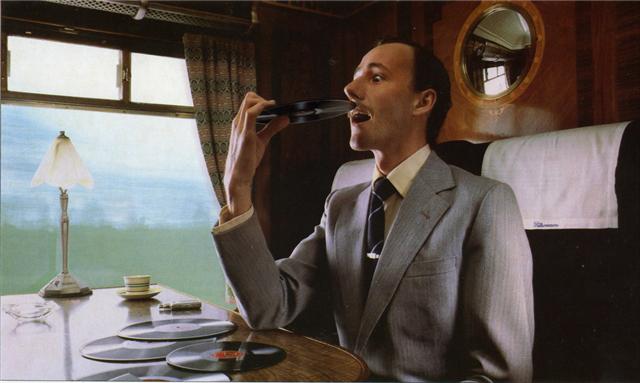
Mel Giedroyc (left) and Sue Perkins are the duo who present Channel 4's Late Lunch. Mel, 30, is from Surrey. She studied modern languages at Cambridge. A fan of Wimbledon FC, she lives alone in West London. Sue, 29, also studied at Cambridge, graduating in 1990 with a degree in English Literature. After failing to forge a career as an advertising copywriter, she formed a comedy team with Mel. They made their debut with The Naked Lunch, after which they took their show Planet Pussycat to the Edinburgh ...
Interviews By Tobias Jones
Sunday, 10 January 1999
SUE PERKINS: Mel likes to think of herself as a Svengali figure. She witnessed my abortive birth into comedy, and hung around like an impresario, trying to be a big fish in the tiny Cambridge pond in 1988. There is a vague memory of someone in Day-Glo clothes, bleach-blonde hair and fake tan, which in retrospect must have been Mel. I don't know anyone else who would go around looking like that.
I remember meeting her properly three weeks later, on her birthday, in a club. Club is too posh a title - in a pit with wall-to-wall smoked glass and cork tiles on the ceiling, a smell of dead rodents. She was totally off her face: flecks of vomit around her mouth, doing really bad early house dancing, flailing arms knocking everyone over. She called me Barbara, Sheila, Debbie, didn't have a clue who I was.
That kick-started a series of evenings when I would go out and watch Mel get drunk. You would be able to work out where Mel was by following her stomach contents, the piles of puke. She would fall asleep while everyone around her cleared up. She doesn't really drink now, she's lost the tolerance. We hung out a lot, donkeyed around.
It was only after we left university that I realised I wasn't going to have a responsible job. When I was young I wanted to be an ophthalmic surgeon, then a teacher or a great writer. I wanted to be the female Dostoyevsky until I realised that I wasn't very talented. In the midst of the failure of my writing career, Mel wrote me a formal letter, which I've still got: "Dear Sue, I have been thinking" - this was after she'd been rejected by every drama school - "would you like to come and form a double act with me? Love Melanie."
So we started writing dreadful puns. I've still got them all, I'm really anal like that. This was New Year 1992, and then we started doing Radio 4's Weekending. You used to get pounds 8 for one line, so I would write these enormous great diatribes. I wrote a three-parter once, absolutely terrible, but they put it on and we got about pounds 150. I don't think any money I earned subsequently ever felt as good. At the time that was huge.
We stuck it out. There were times when it was really difficult to know where your rent cheque was coming from. In the end I said, "I'm going to have to teach, do something normal, get a regular wage." We had been educated, and it seemed pointless just pissing our life away. It's very hard to know when it's time to stop dreaming.
But in the end we carried on. We instinctively make sure that we don't get down at the same time. Recently Mel was down, saying she had to get out, saying she couldn't stand the people, the drugs, the bullshit. And then it was me saying it was all awful, but we try to buoy each other up.
What I most like about her is also what drives me to distraction: her unquenchable friendliness. She has the capacity at 4am to be utterly lovely. I try, but have a wave of woollies and tiredness. I will always look bad next to Mel. She's a very kind and generous person.
We're very compatible, and understand what upsets each other, and compensate for it. It's like a marriage actually, except obviously without that stuff - although the tabloids seem to think that goes on as well. We have an instinctive sense of when the other is bored, or being patronised or ignored. We're very sensitive to the balance of the act, and know the sacrifices we've made - Mel having to play up to being the ditzy one, when she's actually an incredibly erudite, intelligent person. Whereas with me, I have to be harsher, more ironic and sardonic, than I normally am; I do have a genuinely optimistic and calm side. You have to play up to those characteristics, because otherwise it's bland.
She's got terrible bowel problems, that annoys me. Her bowels are so vocal and mobile. Her feet frighten me - when she takes off her shoes I can't bear to look, they're so wide they're like the devil's feet. And I can tell when she's being insincere: "great", she'll say, with this hollowness underneath. I wish I could do that, put on that mask.
We have had one argument, when I was supposed to have tea with her parents three years ago. She pulled a face, and the implication of me being stupid set me off. We're not really inclined to argue. But I am more critical than she is. I'm a perfectionist, and in television everything has to be done with such speed, and it's botched. I hate that.
I wouldn't do this job unless we were mates. It didn't start as a calculated move to bring two women together to fill a gap in the market. The friendship is more important than work; I couldn't go on tour and not talk to someone.
MEL GIEDROYC: I remember meeting Sue. I think she thinks that we didn't actually speak then, but I remember saying something to her. Maybe she just ignored me, she probably did. Basically, it was 1988, the second summer of love. I had just come back from a studenty beach holiday, and I was wearing some fairly lame rave gear. Tragically, a bandana and a whistle were involved.
It was a gig, one of those comedy evenings called a "smoker". They were usually predominantly male, and that night there was a dreadful guy who came up on stage to do a gag about confusing Pyrex with Durex, all about going out with this hot dish. There was a slightly tumbleweed atmosphere in that cellar - beer, carpets, smoke.
Suddenly out of nowhere came this mad, six-stone pixie figure. She leapt on to the stage, and it was Perks. She looked like an alarmed rooster, her hair a cockscomb. She had three fags on the go, and obviously had no material. She just grabbed the mike and did this ramble for 15 minutes, and brought the house down. I went up to her and said something very cheesey like, "Hello Sue, welcome to the bosom of comedy." She was very skinny, so I spent the next three years buying food for her.
We got on extremely well. We did some very lame gigs performing sketches with two guys, and Sue would compere. But because she was a year younger than me we never knew each other well until after college. We both got very shit degrees, and I failed to get into every drama school, so I gave her a ring and said, "Do you want to write stuff for Weekending?"
We started writing there once a week. You'd go into a room with 40 other people, just for the warmth and free BBC coffee. The rest, as they say, is mediocrity.
There is never a dull moment. She's fantastic company. Over the last 10 years, we've probably averaged 12 hours a day in each other's company. We're very good mates as well as working together. We live about a 20- minute bus ride apart. It's probably just as well we don't live together, because we would never get anything done. It would all disintegrate into total chaos. It takes a lot to boot us up the arse.
Sue is the most unfailingly kind person. She's like Don Corleone with her friends, which I must say can at times be trying: she will always get the truth out of you, you can't hide anything. She's incredibly loyal to her mates. She would drop anything - except a date with Jon Snow - for her friends.
And she's bloody hilarious. The crippling puns, the ludicrous humour. We have quite different personalities in some ways, but there's a lot we have in common: we come from close families and have similar principles. We agree work isn't the be-all and end-all. We wouldn't work together if we weren't friends, what would be the point?
Usually, we might meet up at one o'clock, and talk for three hours, absolute ramble and rubbish, and then probably do about half an hour's work. I have a different way of going about things: Perks will say exactly what's on her mind, everything is out there. I'm a little more seven veils-ish, I don't give a lot away. Maybe I'm more reserved, until I have half a shandy inside me.
She does do this annoying thing with her nails. There's this clicky noise, then chewing, analysing it, then back to picking. That really bugs me. And I do sometimes have to wait for her. I'm actually very anal - even though she's the Virgo and I'm the Gemini, I always know where everything is. With Perks, trying to leave a room takes half an hour:
We've only ever had one slight altercation. She was late for something, and when I'm pissed off I get really over- jolly. I said, "Lovely to see you," turned away and pulled a face. She caught the end of it and we rowed. I couldn't hack it if we normally argued. It's the nature of what we do: we need to be able to rely on each other. It comes across if there's a nasty edge between people.
We spend weekends together, go on holiday together. We have a lot of mates in common. Sue's a very good cook, so she'll cook or we'll go and see a film. I would like to think I still go out clubbing, but I'm 30 now, so my clubbing days might be behind me.
We'll be in touch in 50 years' time. I like to see us as washed-up old hams in a home for the terminally ham, talking about the old days. I'll probably have an orange wig, and Sue will be pushing me around in a bathchair. I can't imagine life without her, we'll always be mates. Cut to five years' time ...
martes, octubre 05, 2010
I Soprano 4x09 Sbagli imperdonabili - Scherzo telefonico
acá los italo-americanos vuelven, como por magia, a sus origenes! DOBLADOS al ITALIANO.
7 Seven Minute Sopranos - a "whacked out" refresher
lunes, octubre 04, 2010
domingo, octubre 03, 2010
sábado, octubre 02, 2010
viernes, octubre 01, 2010
Kinski sobre Werner Herzog....
jueves, septiembre 30, 2010
The Move - Beautiful Daughter
domingo, septiembre 26, 2010
sábado, septiembre 25, 2010
miércoles, septiembre 22, 2010
Casanova di Fellini - sequenza tagliata
FEDERICO FELLINI'S CASANOVA - (DONALD SUTHERLAND) - CHEZ DUBOIS
Fellini's Casanova- The Dancing Doll
EL TOPO. Jodorowsky habla:
He was a very nice person. And he gave me the money to make The Holy Mountain, through Allen Klein and Apple. He didn't want anyone to know about it, he did it anonymously. He was a fantastic person, and he really liked what I was doing. One day with John Lennon, he invited me to take tea . . . but, later, when I was shooting Holy Mountain, a Rolling Stone journalist came to interview me on the set. And we were eating and he asked to me — not as part of the interview — "What do you think about the short films John Lennon made?" And I said, "Listen, I don't like that. To see three hundred asses walking, or a fly going from one part of the body to another for half an hour, that's not a movie for me." Bueno. They published that and John and Yoko Ono both got angry. And then I sent them flowers, I said, "I never wanted to suggest . . ." But that was it broken. Our history was broken there. I've never told this story, but I am sorry about it. But it was the journalist, so, what can you do? But, still: if you ask me do I like their short pictures, I say . . . No! They are awful! I don't like them. What can I do?
In Sintonia con Federico... assolutamente!
I'm reluctant to give interviews because I believe we should avoid them and I'm trying to hold to this sane decision. But in certain cases I end up by accepting, because there are friends who insist I do interviews. Then there's the curiosity of meeting somebody new. Also it's flattering; so out of an indecent vanity and a shameless desire to prattle about myself, I consent.
I've given a lot of interviews; so, I don't trust what I say. I repeat myself. I try to remember what I've already said and what I still haven't said. For fear of repeating something I've already said, I invent other things."
You told me in one of our conversations that you’ve always had a latent envy for anyone who expresses, even in a primitive way, a conviction, a creed, a dogma. You, who don’t want to take refuge in any rigid system of convictions or ideologies, what’s your "center," your "pivot"? The cinema?
"Do you mean "when do I feel at home"? "
Yes.
"You ask a question that’s not so simple to answer. I think my pivot point is finding myself in a nowhere in which I recognize myself. Said that way, it can seem like romantic complacency, shamelessly poetic.
No, no, I understand your answer very well. I’ve written about the nowhere. It’s a perception I know well precisely because I believe that creative people are acquainted with it. That is, people who have refused the comfort of certainties, of dogmatic, ideological constructions.
A less esoteric and less presumptuous center is my work, when I’m seized, when I have an identity, am caught up by what I’m doing. As in driving a nail, putting up a wall on a set, putting a wig on an actress’s head, seeing that the makeup is just right; when I’m on the go, obsessed in filming in the midst of a group of people who look at me with the respect due to age and, maybe, also with a little worry and amusement.
I lend my body, my common sense, or talent to something that is a stream, a stream that invites me, obliges me, forces me to personify myself in so many things, persons, thoughts, attitudes. And there, just at the moment in which I’m not there — since I’m in so many places taken up by so many details — is, I believe, my pivot point.
I believe that for me this is happiness — to lose one’s memory, to forget the self, the part you call yourself, which is really just a superstructure. This is the part you forget in order to be inhabited by an energy that borrows your body and your nervous system. "
viernes, septiembre 17, 2010
martes, septiembre 14, 2010
Julian Lennon - Saltwater - In Concert 1993
sábado, septiembre 11, 2010
martes, septiembre 07, 2010
BP OIL etc.

"Only after the last tree has been cut down, Only after the last river has been poisoned, Only after the last fish has been caught, Only then will you find that money cannot be eaten."
lunes, septiembre 06, 2010
domingo, septiembre 05, 2010

'Il Manifesto' (Diario Italiano), Nota por Luca Gricinella
LUCA VIVE: INTERVISTA AD ANDREA PRODAN
La recente e coinvolgente chiacchierata con Alberto Prunetti (ossia il post precedente a questo, vedi qui) è l’occasione giusta per mettere finalmente on line la mia intervista ad Andrea Prodan, fratello del mito del rock argentino Luca Prodan (1953 – 1987), realizzata per Alias e pubblicata appunto sull’inserto de Il Manifesto a inizio 2008. Ho conosciuto parti della storia di Luca Prodan ogni volta che mi presentavo col mio nome a un autoctono durante il mio primo viaggio in Argentina nel Maggio 2004. Grazie al fratello Andrea, contattato grazie a una catena partita da Alberto Campo e passata per Guido Chiesa e Andrea Bruschi, l’ho focalizzata meglio. Qui di seguito ecco l’intervista di due anni e mezzo fa che poi ha avuto un seguito con un radio-documentario realizzato con Paolo Maggioni per Radio Popolare di Milano.

Andrea e Luca Prodan durante uno show al Café Einstein di Buenos Aires (photo courtesy of Andrea Prodan)
Il vero e proprio mito del rock argentino? È italiano. Si tratta di Luca Prodan, nato a Roma nel 1953, morto a Buenos Aires nel 1987 a causa di un infarto massivo riconducibile all’abuso di alcol. La sua popolarità in Argentina è impressionante, trasversale, tanto che nel 2006 la Segreteria Culturale Nazionale e le Poste Argentine hanno dato alle stampe un francobollo in suo omaggio (“all’irriverente cantante italiano”). Col gruppo di cui era leader, i Sumo, Luca ha introdotto sul finire della dittatura i suoni (post) punk, new wave e reggae cantando sia in castigliano ma, soprattutto, in inglese. Molto è dovuto a un soggiorno lungo a Londra, dove era finito per scappare alle imposizioni di un rinomato college scozzese dove era stato spedito dalla sua famiglia. Qui conosce un ragazzo di origine argentina, Timmy McKern, un incontro fondamentale per la sua vita, ma da qui iniziano anche le sue disavventure: la prima fuga a Londra coincide non solo con la conoscenza dei suoni e delle culture che dominavano gli anni Settanta, ma anche con quella dell’eroina. A questo si sommano alcune grane burocratiche: in Italia è dichiarato disertore, incarcerato tre mesi e poi spedito in caserma, da dove scappa proprio per tornare a Londra; tornerà nella sua città natale solo dopo tre anni per regolarizzare la sua posizione. Ma il suicidio di sua sorella e il suo seguente coma epatico per la sempre più forte dipendenza dall’eroina lo spingono, una volta rimessosi, ad accettare un invito di McKern (stabilitosi nelle campagne nei pressi di Cordoba): è così che nel 1981 Luca Prodan vola a Buenos Aires. E questo è il prologo del mito.
Abbiamo contattato il fratello minore di Luca, Andrea – musicista e attore che tra gli altri ha lavorato con Peter Greenaway, Gianni Amelio e Guido Chiesa – per farci raccontare meglio questa storia ignorata dalla nostre parti. Il destino vuole che lo stesso Andrea ora viva in Argentina.
Anche te, come tuo fratello, in Argentina: cosa ti ci ha portato?
Il mio primo viaggio in Argentina avviene durante la dittatura, dopo la vicenda Malvinas/Falkland. È così che ho visto i Sumo al Café Einstein (mitico club ‘under’), per poi seguirli in tour nella provincia di Entre Rios. Mi sono trovato davanti un grande gruppo, anche per i canoni del miglior rock europeo. Reggae, Joy Division, Wire e Hammil in uno strano misto; Luca scatenato, divertente, intelligente e carismatico: rinato, insomma, dopo le disavventure in Italia e Inghilterra. Nel 1987 poi, mentre lavoravo su un film di Gianni Amelio, mio fratello è morto; allora sono tornato a Buenos Aires, dove iniziò il mito… sono stati anni molto tristi per me. Passiamo al 1995, quando a Bologna ho iniziato a lavorare su un disco puramente vocale che una strana coincidenza mi ha portato a registrare a Buenos Aires. L’album, Viva voce, è stato inserito da Peter Gabriel nei suoi favoriti dell’anno e in Argentina ha vinto il premio A.C.E. (assegnato dalla critica specializzata). Mi sentivo tranquillo perché era ben diverso dai Sumo: il fantasma di Luca era (ed è) gigante qui e cercare di rivaleggiare sarebbe stata una follia! La vita comunque è veramente strana: poco dopo ho avuto un figlio con una donna argentina, ho cantato nello stadio del River Plate proprio una canzone dei Sumo, No tan distintos… insomma lo sforzo di tornare in Italia si faceva sempre più sentire. L’energia creativa e precaria dell’Argentina mi alimentava, malgrado (in un primo momento) la presenza continua di mio fratello; qui sui muri ci sono dappertutto scritte ‘Luca Vive’. Nel 2001 insomma ho deciso di trasferirmi a Buenos Aires: sono arrivato il giorno in cui il Presidente De La Rua scappava dalla Casa Rosada in elicottero! Nonostante il momento critico, il Paese viveva un fermento popolare veramente emozionante ed entusiasmante. Ho partecipato ad assemblee popolari, cantando e raccontando le mie esperienze cinematografiche. La gente generosa, vivace, coraggiosa. Il paese economicamente a pezzi ma eticamente sveglio e vibrante. Ed eccomi qua: quarantacinque anni e due figli da due donne argentine.
Luca si sentiva italiano fino a un certo punto, o sbaglio?
Luca, come me, aveva un rapporto particolare con l’Italia giacché siamo veramente bilingue e “biculturali”. Questo fa sì che ti trovi a difendere un paese quando ti trovi nell’altro e viceversa! Ti mancano cose di uno quando sei nell’altro ecc… Luca aveva una relazione viscerale con l’Italia. La decisione di farlo internare in un collegio in Scozia all’età di dieci anni e di tenerlo lì fino alla sua fuga ai diciassette è parte fondamentale della sua crescita e della sua successiva vita e personalità. Lui voleva solo tornare in Italia, pescare, mangiare, fare casino a Piazza Navona e a Campo de’ Fiori. Noi due piangevamo di notte in collegio ascoltando i primi dischi di Battisti. La sua natura “ribelle” è nata da questa esclusione, questo esilio forzato, che io ho meglio digerito. L’eccentricità degli Inglesi, la fede nella musica, nelle persone come parte di una società ci piacevano molto; la loro ironia e il loro ‘humour’. Le istituzioni italiane invece a Luca facevano schifo; l’ingiustizia sociale italiana, l’ipocrisia dello Stato: sei mesi per detenzione di hashish, sei per diserzione, e molte altre cose. Poi però interrompeva gli show per cantare canzoni napoletane e stornelli romani: esilarante per le gabbie sonore che di solito il rock crea.

Luca Prodan durante uno show del 1986 (photo courtesy of Andrea Prodan)
E poi l’Argentina, dove durante la dittatura i Sumo spingevano suoni “nuovi”, non proprio allineati. Come erano visti dal sistema?
I militari erano già in decadenza e la gran parte dei “sospetti” erano già stati liquidati (trentamila). Ciononostante la sfrontataggine surreale dei Sumo provocava paura in alcuni e malintesi in molti. Luca non è mai caduto nella facile trappola dei “cliché” politici. È stato pugnalato da poliziotti in borghese della dittatura nei camerini di un club (gli hanno tagliato i tendini della mano sinistra; per questo i Sumo hanno cercato un nuovo chitarrista trovandolo in Riccardo Mollo), e più volte lui e la sua ragazza hanno ricevuto minacce, anche da membri del pubblico che odiavano la lingua inglese e tutto quello che il colonialismo apparentemente toccava in Argentina. Ma ironicamente i Sumo sono forse la band più argentina che ci sia! Insomma Luca ha scelto la scalata più ripida, più strana ma a lui più congeniale e spontanea. Non a caso l’assoluta trasparenza e pazzia di questa band è tuttora oggetto di fascino.
Qual è a tuo avviso il miglior album dei Sumo?
Il primo, Corpiños en la Madrugada (1983), e l’ultimo, After Chabon (1987).
E c’è un brano più significativo di altri (anche in relazione alla vita di Luca)?
Running Away, una canzone tratta da Time, Fate, Love, un disco postumo, solista… però è ingiusto citare solo questa giacché la forza di Luca stava nella sua capacità di “spogliarsi” in pubblico e affrontare le sue debolezze e forze senza fumose allegorie.
Dallo scioglimento dei Sumo si sono formati due gruppi: c’è in loro qualcosa che segue fedelmente l’esperienza “capitanata” da tuo fratello?
Se Los Divididos mantengono la forza dei Sumo e anche certo gusto per il paradosso e il ridicolo, Las Pelotas lo stile indipendente, ‘amateur’ e in qualche modo caotico… ma in quest’ultimo caso direi mantenevano, visto che hanno perso queste cose. Del resto le due ‘bandas’ hanno ormai patti troppo stretti con le multinazionali per essere prese sul serio come eredi dei Sumo. Sumo era avanguardia e coraggio; ma questo lo sanno anche loro, gli stessi integranti delle due ‘offshoots’. Forse Romapagana (vedi anche il myspace, qui), il mio progetto musicale attuale, propone quanto meno lo spirito della prima formazione dei Sumo, ma suona veramente presuntuoso sostenerlo e da fuori, credo, anche patetico.
E libri, video, pellicole che hanno saputo rendere al meglio lo spirito di Luca?
L’unico film che s’avvicina in modo veritiero a Luca e alla sua storia è il documentario Luca di Rodrigo Espina e tuttora il libro più completo è Luca. Un ciego guiando a los ciegos di Carlos Polimeni, un giornalista di queste parti.
viernes, septiembre 03, 2010
The Pretenders.....Talk Of The Town.
como una ola fresca sobre nuestras cansadas playas auditivas.
Un trabajo que hice para ECPAT, la Asociacion Internacional Contra la Prostitucion Infantil
un trabajo comisionado por:
http://www.ecpat.net/EI/index.asp
Arizona Governor Jan Brewer at NRA's Phoenix Convention
(and who's her hairdresser?)
OMG this is so embarrassing ....Save us from Jan Brewer!
don't - hurlingham reggae band
jueves, septiembre 02, 2010


miércoles, septiembre 01, 2010
lunes, agosto 30, 2010
El Maestro de Vida

El I Ching como herramienta de Trabajo personal
El I Ching o "Clásico de los Cambios" es un libro vivo. Es uno de los libros más viejos de la cultura china, uno de los cinco Clásicos de Confucio, libros pilares de esta cultura. Sus distintas partes tienen entre 2,000 y 4,000 años de antigüedad. Es un libro a la vez oracular y moral, a la vez filosófico y cosmogónico. Tal vez, como sugiere Jung, tirar el I Ching sea una fora de conversar con uno mismo. Tal vez se trate de una conversación con nuestros propios lados, nuestro subconsciente colectivo y sus arquetipos. Pero creo que si lo leemos con profundidad, inocencia y entrega, puede haber algo más.El I Ching no sabe el futuro, o si lo conoce lo conoce sólo como potencialidad múltiple. Pero con tantos años y manos sabias que lo tejieron, este libro oracular suele ver más lejos que nosotros. Vé las líneas. Vé el presente, o qué nos depara si seguímos en una dirección dada.Lo que hace el I Ching es proponer una mirada a la vez aguda y abarcadora sobre lo que nos está pasando. Esta mirada es como un puente, si logramos integrarla recibimos un empujón adicional para que el camino hacia adelante sea menos repetitivo y mecánico y se vuelva más directo y profundo. Para que sea un camino con más corazón.
domingo, agosto 29, 2010
sábado, agosto 28, 2010
Algo sobre Ray Phiri

In 1985 Paul Simon asked Ray along with Ladysmith Black Mambazo to join his Graceland project, which was successful but also helped the South Africans to make names for themselves abroad. Ray was to collaborate with Paul Simon again on Simon’s Rhythm of the Saints album, which saw him perform on stages such as Central Park and Madison Square Garden as well as appearing on top television shows in the USA.
He was born to Malawian immigrant worker and South African guitarist nicknamed "Just Now" Phiri.

viernes, agosto 27, 2010
Paul Simon: Graceland, concert Zimbabwe / South Africa
Paul Simon & Miriam Makeba
jueves, agosto 26, 2010
miércoles, agosto 25, 2010
martes, agosto 24, 2010


lunes, agosto 23, 2010
ETERNIT el killer que se vende en TODA Argentina
Se han sucedido los recuerdos luctuosos, no en vano hablamos con asociaciones de victimas, pero se ha hecho especial mención de Romana Blasotti, una mujer de 82 años, que hace veinticinco inició la lucha contra Eternit, empresa del amianto en Italia, después de ver desaparecer a su marido, a su prima, a un sobrino, a su cuñada y, finalmente, a su hija, todas ellas víctimas directas o indirectas del polvo mortal. Romana ha podido tener la satisfacción de ver iniciado el proceso penal contra los presuntos homicidas, y cuenta que a pesar del dolor afincado en su estómago que no cesa, tiene aún ganas de vivir y de jugar con sus nietos en un alarde de esperanza. Esta mujer, Romana Blasotti, es todo un símbolo de coraje en toda la región del Piamonte italiano y especialmente en Casale Monferrato, el pueblo en el que ha estado instalada la fábrica de Schmidheiny hasta el año 1986, y que ha regado de muertos su suelo, entre trabajadores, familiares y vecinos, por lo cual se le juzga. Una gran parte de esos dos mil, cuyos familiares se han personado en el juicio.
Se ha concluido el encuentro mundial de víctimas y luchadores contra el amianto con un nudo en la garganta pero a la vez con la esperanza de que empieza a verse luz en esta fatídica historia que comenzó a principios del siglo veinte.
Lo que ocurra en Turín servirá para todo el mundo.
Los afectados, que somos todos, hemos entonado para terminar la consigna de "justicia a Eternit"
.bmp)